EMERGENCY CALLS AROUND THE CLOCK
CLICK TO TALK TO A REAL PLUMBERTAP TO CALL NOW
How Do I Choose the Right Water Heater for My South Shore Home?
Choosing a water heater for a Quincy, Abington, or South Shore home depends on household demand, fuel type, basement layout, venting, water quality, and winter conditions. This guide explains what to check before replacing or upgrading your system.
When a water heater starts leaking, runs out of hot water, or makes unusual noises, the first question is often, “What should replace it?” The right answer depends on more than tank size. South Shore homes have different plumbing layouts, basement conditions, fuel sources, and electrical capacity, so a water heater that works well in a newer Abington home may not be the best choice for an older Quincy house.
Start by identifying your current system and the problem you are trying to solve. Is the tank leaking, or is it simply struggling to keep up? Are you remodeling a bathroom, adding occupants, or trying to reduce the amount of basement equipment? A replacement should address the actual need rather than automatically copying the old installation.
How much hot water does your household use?
Think about when your household uses hot water, not just how many people live there. Several showers in the morning, laundry, a dishwasher, and a large soaking tub can create a short period of heavy demand. A household with lower, spread-out usage may not need the same capacity as a family that uses multiple fixtures at once.
Make a simple list of your major hot-water fixtures and note when they normally run. If the current heater supplies enough hot water most of the day but runs out during one predictable peak period, the issue may involve recovery capacity, temperature settings, sediment, or an undersized system. If hot water is consistently weak, the problem may be more than tank size.
Which fuel and utility connections are available?
Many South Shore homes use natural gas, propane, oil, or electricity. The available fuel source affects the type of heater that can be installed, along with venting, combustion air, electrical service, and equipment location. An older basement may have a chimney or vent arrangement that was suitable for the existing appliance but not for a new model.
Do not assume that a gas water heater can be replaced with another gas unit without checking the venting and installation area. Likewise, an electric model may require adequate panel capacity and suitable wiring. These details should be evaluated before selecting a product, especially in older Massachusetts housing stock where previous work may not match current requirements.
Should you choose a standard tank or a tankless model?
A conventional tank stores heated water and is familiar to most homeowners. It can be a straightforward option when the existing location, fuel source, and household demand are suitable. The installation still needs to account for shutoffs, discharge piping, drainage, expansion control, venting where applicable, and access for future service.
A tankless water heater heats water as it is needed and can reduce the amount of space used for storage. It may be useful when continuous hot water or a smaller equipment footprint matters. However, the system must be sized for simultaneous fixtures, and the home may need appropriate gas capacity, electrical service, venting, water-quality treatment, or upgrades to the surrounding plumbing.
Tankless is not automatically the best choice for every South Shore home. If incoming water is cold during winter, the unit may need to work harder to reach the desired outlet temperature. Flow rate, maintenance access, mineral buildup, and the number of fixtures running together all matter. Review the full installation requirements before choosing based only on the equipment label.
What should you check in a Massachusetts basement?
Look at the installation area before shopping. Is the floor level and able to handle drainage? Is there a working drain nearby? Could a leak damage finished space, stored belongings, or electrical equipment? Is the heater close to a foundation wall, sump pit, furnace, or oil tank? In a tight basement, service clearance can be just as important as the heater’s dimensions.
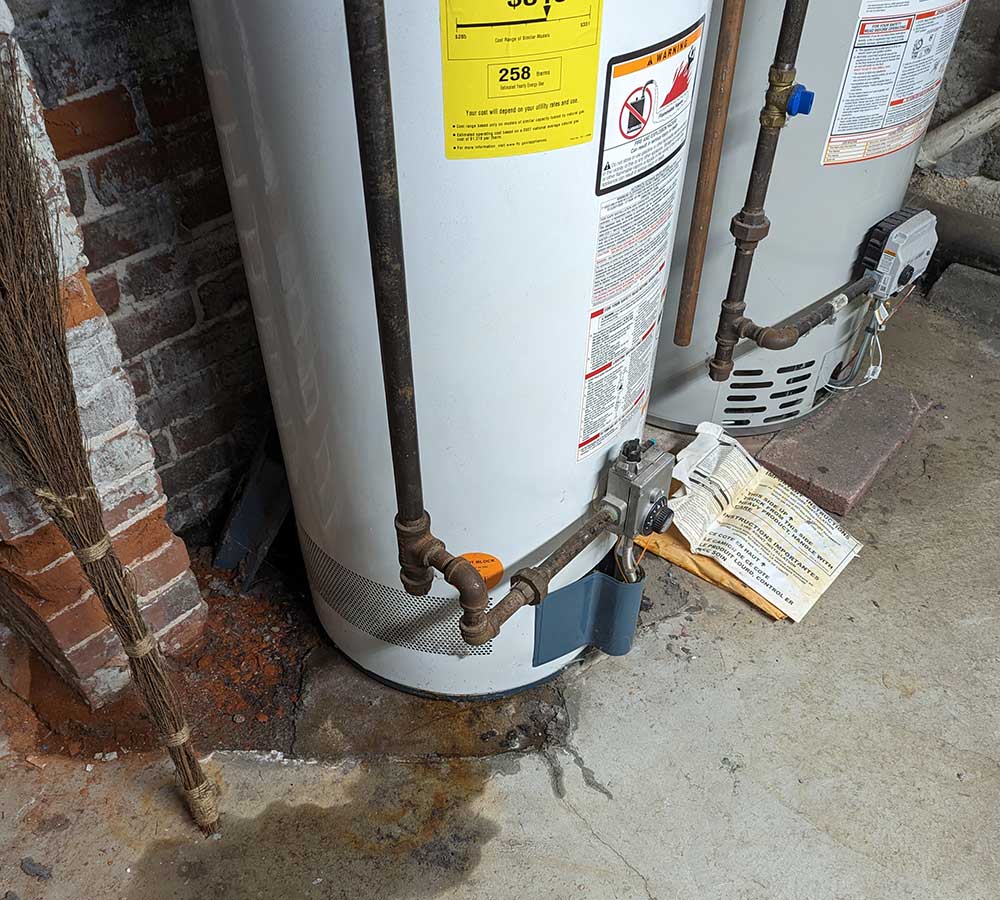
Cold basements also affect exposed piping and equipment. Insulation, freeze protection, and proper routing can matter during a Massachusetts winter. Do not block required service access or place storage around the heater. If the existing unit has leaked, check for water damage and corrosion around the pan, shutoff, connections, and nearby framing.
Does water quality affect the decision?
Hard water, sediment, and mineral buildup can reduce efficiency and shorten the useful service life of water-heating equipment. Signs may include cloudy water, popping or rumbling sounds, reduced hot-water output, or recurring service problems. A water-quality concern may require a different maintenance plan or filtration approach, not simply a larger heater.
Ask what maintenance the proposed system needs and whether the shutoff, drain, filters, anode components, and service connections will remain accessible. A system that cannot be serviced safely is a poor fit even if its specifications look attractive.
What should you ask before approving installation?
- Is the recommended capacity based on actual household demand?
- Will the existing gas, electrical, venting, drainage, and water connections work with the new system?
- Does the equipment fit while preserving required service clearance?
- What changes are needed to bring the installation up to current Massachusetts requirements?
- How will the old heater be disconnected and removed?
- What routine maintenance should the homeowner plan for?
Johnson Bros. can evaluate the existing setup and discuss replacement options through our water heater service. If you are comparing a storage tank with a compact on-demand system, review our tankless water heater service as well. For a broader overview of energy-use considerations, the ENERGY STAR water heater guidance is a useful starting point.
If your current heater is actively leaking, turn off the water supply to the unit if it is safe to reach, shut off the fuel or power as appropriate, and keep people away from hot water or damaged electrical areas. A leaking heater should be assessed promptly. Johnson Bros. charges a $99 service fee for the service call; the right replacement depends on what the technician finds at the home.
Plumbing service in the towns this covers
Common questions
How do I know what size water heater my home needs?
Is a tankless water heater a good choice for an older South Shore home?
What should I check before replacing a leaking water heater?
Should I replace my water heater with the same type I already have?
Need a Plumber Today?
Same-day availability when scheduling permits across Quincy, Braintree, Weymouth & the South Shore.
Johnson Bros. Plumbing
Licensed Master Plumber · MA Lic. PL #17034-M · Quincy and South Shore service