EMERGENCY CALLS AROUND THE CLOCK
CLICK TO TALK TO A REAL PLUMBERTAP TO CALL NOW

What Should a New Homeowner Check in Their First 90 Days?
Bought a home on the South Shore? The first 90 days are your window to catch plumbing problems before they become expensive surprises. Here's what to check, test, and replace right away.
The First 90 Days Are When You Find Out What You Actually Bought
Buying a home on the South Shore is a significant commitment. Whether you landed a 1940s Cape in Abington, a 1970s split-level in Weymouth, or a newer build in Hingham, every house comes with a plumbing system that was either maintained well, maintained poorly, or somewhere in between — and the home inspection you paid for may not have caught everything.
In 16 years of plumbing work across Quincy, Braintree, Milton, Weymouth, Hingham, and Abington, we've seen new homeowners discover galvanized pipes two weeks after closing, water heaters running on borrowed time, and supply lines that were one bad day away from flooding a finished basement. None of it had to be a surprise. This checklist covers what to look at in your first 90 days.
Day One: Find Your Main Shutoff Valve
Before anything else, find your main water shutoff. In a South Shore emergency — a pipe bursts, a supply line fails, a toilet overflows and won't stop — the ability to kill the water supply to the entire house in under 30 seconds is the difference between a manageable cleanup and a catastrophic water damage claim.
In most homes built before 1980, the main shutoff is located where the supply line enters the foundation, usually near the front of the house facing the street. Once you find it, make sure it actually works — turn it to the closed position, open a faucet inside to confirm flow stops, then open it back up. Shutoffs that haven't been operated in years can seize, and you want to discover that before an emergency.
Also locate the individual shutoff valves under every sink, behind every toilet, and at the washing machine. Know where they are before you need them.
Test Your Water Pressure
Healthy residential water pressure falls between 40 and 80 PSI. Anything above 80 PSI is damaging to your fixtures, appliances, pipe joints, and water heater over time. Anything below 40 PSI and you'll notice it in the shower.
A pressure gauge that threads onto a hose bib costs $10 at any hardware store. Attach it to an outdoor spigot with everything else turned off and read the static pressure. If you're over 80 PSI, you may need a pressure reducing valve (PRV) installed or an existing one adjusted. High pressure is particularly common in Quincy and Weymouth where municipal supply pressure can run on the high side of the range.
Identify Your Pipe Material
- Copper — The gold standard. Properly installed copper supply lines last 50 years or more.
- CPVC or PEX — Common in homes built or replumbed after 1985. Both are solid materials with long service lives.
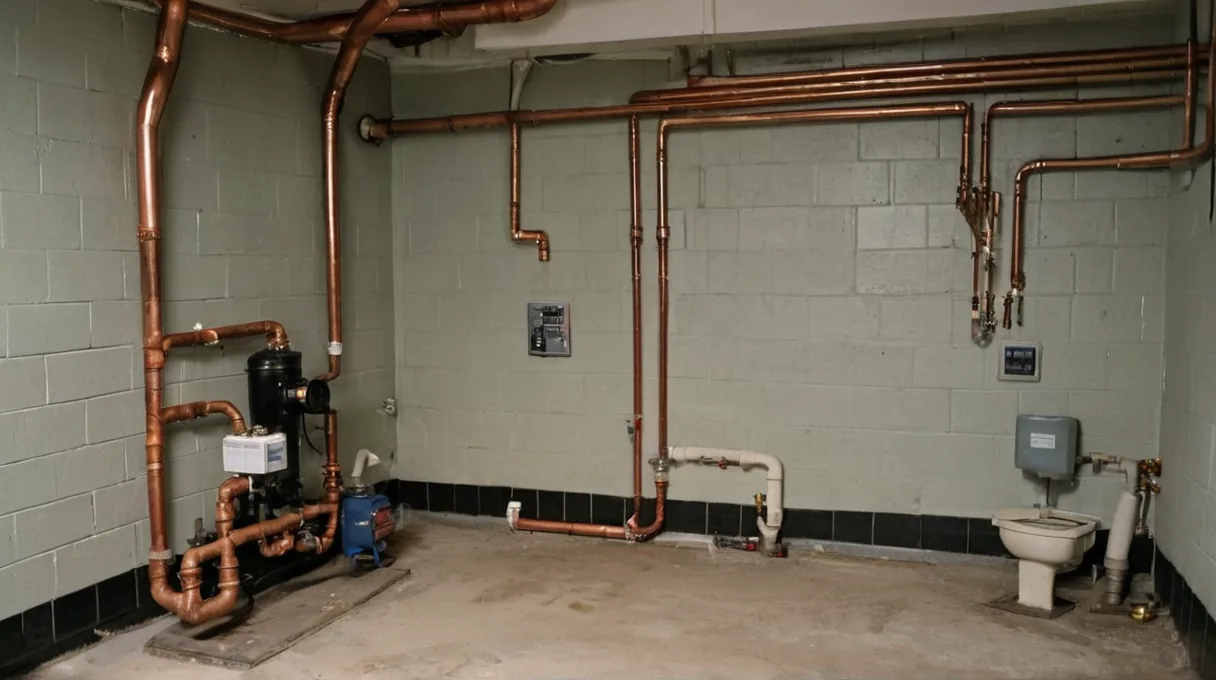
- Galvanized steel — The problem material. If your home was built before 1970 and hasn't been replumbed, you may have galvanized supply pipes. Galvanized corrodes from the inside out, progressively restricting flow over decades until you're getting a trickle at the second floor shower and reddish-tinged water. Budget for a repipe — it's a known future expense.
Check exposed pipe in your basement, under sinks, and in the utility room. If you're not sure what you have, a plumber can identify it quickly.
Check the Water Heater Age and Condition
The age of your water heater is stamped into the serial number on the rating plate. A standard tank water heater that's 10 years old is living on borrowed time. One that's 12 or older is overdue.
Signs of a failing water heater: rust-colored hot water, visible corrosion around the base, a rumbling or popping sound when heating (mineral buildup), or any moisture around the base. A leaking tank doesn't give you much warning — they tend to fail fast.
If the water heater that came with your home is 8 years or older, factor replacement into your budget planning. This is also the right moment to evaluate whether a tankless unit makes sense for your situation.
Inspect and Replace Supply Line Flex Hoses
Go under every sink and behind every toilet. Look at the braided flexible supply lines — the short hoses connecting the shutoff valve to the fixture. If they're more than 7 years old (check the date stamp printed on them), replace them now. They cost $8 each and take 10 minutes. A failed flex line under a sink in a bathroom above a finished basement is a water damage event that easily runs $5,000 to $20,000 in repairs.
Evaluate Your Drain Lines
Run all your drains and watch how they clear. A slow drain in one fixture is typically a local clog. Multiple slow drains simultaneously point to a problem deeper in the stack or main sewer line.
In homes built before 1960 in Quincy, Abington, and parts of Braintree, original cast iron drain lines and clay sewer laterals are still in service. If the inspection didn't include a sewer camera inspection of the main lateral to the street, consider scheduling one. A camera inspection is far cheaper than discovering a collapsed lateral when the drains back up into the basement.
First 90 Days Priority List
- Locate and test your main shutoff and all fixture shutoffs.
- Test water pressure — check against the 40–80 PSI target range.
- Identify your pipe material — copper and PEX are fine; galvanized steel needs a plan.
- Check the water heater age — replace if it's 10 years or older.
- Replace all flex supply lines under sinks and behind toilets if they're over 7 years old.
- Run all drains and watch for slow or simultaneous sluggishness.
- Schedule a dedicated plumbing inspection for any home over 25 years old.
The South Shore's older housing stock is full of character — and full of plumbing that's been patched, extended, and occasionally improvised over decades. Getting clear on what you have early means you're making informed decisions, not reactive ones. Johnson Bros. Plumbing serves the entire South Shore — call us at (617) 479-9911 and we'll get you scheduled.
Plumbing service in the towns this covers
Common questions
What is the first thing to find in a new house?
How do I tell how old the water heater is?
Should I get a sewer camera inspection when I buy?
Need a Plumber Today?
Same-day availability when scheduling permits across Quincy, Braintree, Weymouth & the South Shore.
Johnson Bros. Plumbing
Licensed Master Plumber · MA Lic. PL #17034-M · Quincy and South Shore service