EMERGENCY CALLS AROUND THE CLOCK
CLICK TO TALK TO A REAL PLUMBERTAP TO CALL NOW
What Should South Shore Homeowners Know About Drain and Sewer Problems?
A backed-up drain can point to a local clog, a blocked main sewer line, or a problem outside the house. Learn what South Shore homeowners can check safely and when to call a licensed plumber.
Drain and sewer problems are common in South Shore homes, especially in older houses with aging cast-iron, clay, or Orangeburg-era piping. A slow sink drain is different from wastewater rising through a basement floor drain, but both deserve attention before the problem spreads.
The first step is to identify where the problem starts. Is one fixture slow, or are several fixtures backing up at the same time? That distinction can help show whether the blockage is inside a branch drain or farther downstream in the main building sewer.
What does a slow drain usually mean?
A single slow bathroom sink, tub, or kitchen sink often has a localized obstruction. Hair, soap residue, grease, food particles, and sediment can collect near the trap or in the short section of pipe serving that fixture. A plunger may help if there is standing water and the fixture has a proper overflow opening that can be covered.
Avoid mixing chemical drain cleaners. Combining products can create dangerous fumes, and caustic chemicals left in a pipe can injure someone working on the drain later. Chemical cleaners also do not repair damaged, collapsed, or root-intruded piping.
If a fixture repeatedly slows after temporary improvement, the obstruction may be farther into the branch line. That is a good point to arrange professional plumbing service rather than continuing to push the blockage deeper.
When is a drain problem probably affecting the main line?
Several warning signs suggest a main drain or building sewer problem:
- More than one fixture backs up or drains slowly at the same time.
- Flushing a toilet causes water to rise in a nearby tub, shower, or floor drain.
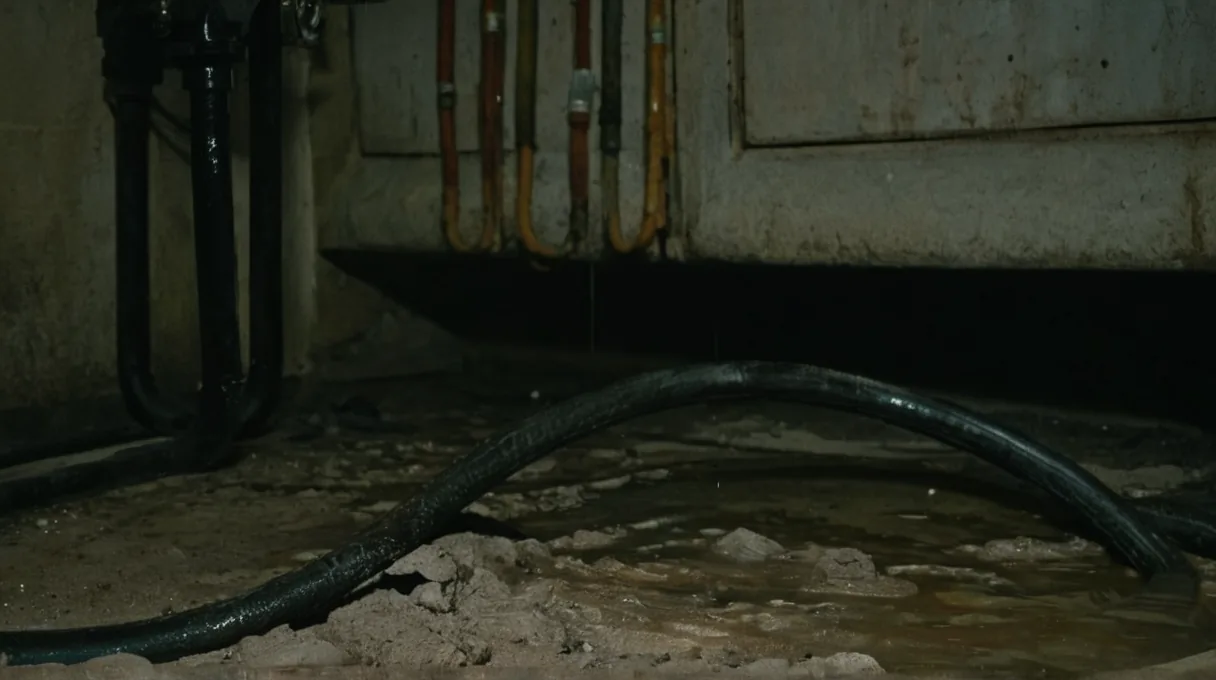
- Wastewater or foul-smelling water comes up through a basement drain.
- You hear gurgling from toilets or drains when another fixture is used.
- The problem returns quickly after a local drain is cleared.
A basement drain backup should be treated as a sanitation and property-damage concern. Stop using sinks, toilets, washing machines, and dishwashers until the source is understood. Keep children and pets away from contaminated water, and move stored items off the floor if it is safe to do so.
What should South Shore homeowners check outside?
During heavy rain, snowmelt, or a rapid thaw, water can enter through foundation cracks, window wells, failed exterior drainage, or a stormwater problem. That is not always the same as a sanitary sewer backup. Look at the water's appearance and timing, but do not rely on smell alone to identify the source.
Check whether the sump pump is running and whether its discharge line is blocked by ice. Confirm that downspouts are not discharging directly against the foundation. Do not remove a sewer cleanout cap during an active backup unless you know what you are doing; pressure behind the cap can release wastewater suddenly.
Massachusetts homeowners can review state guidance on wastewater and septic responsibilities through the Massachusetts wastewater and septic systems resource. If the home is connected to a municipal sewer, the town or sewer department may also need to be involved when the blockage is in the public portion of the system.
How do plumbers diagnose a drain or sewer blockage?
A plumber first asks which fixtures are affected and when the symptoms began. The location of cleanouts, the home's layout, and the pipe material can narrow the likely problem area. A drain machine may be used to clear an obstruction, while a camera inspection can show roots, cracks, offsets, grease buildup, or a damaged section that a cable alone cannot explain.
Snaking and hydro-jetting are not interchangeable. A cable can open a passage through many blockages. Hydro-jetting uses controlled water pressure to clean buildup from the pipe walls, but it should be selected only after the pipe condition and access are considered. Fragile or badly damaged piping may require a different approach.
If a camera shows a break, collapse, severe offset, or recurring root intrusion, clearing the line is only a temporary measure. Ask for the location and nature of the defect, what evidence supports the recommendation, and whether the next step is a repair, replacement, or continued monitoring.
How can older South Shore homes reduce drain problems?
- Do not pour cooking grease, fats, or oils down the kitchen drain.
- Use a drain screen to catch hair and remove the debris rather than washing it through.
- Flush only toilet paper and human waste.
- Know where the main cleanout and shutoff valves are located before an emergency.
- Keep basement floor drains clear of storage bins and debris.
- Have recurring backups evaluated instead of repeatedly treating the symptom.
- Ask about a camera inspection when the property has older sewer piping or repeated stoppages.
For homes with a private septic system, maintenance and pumping requirements differ from municipal sewer service. For municipal connections, homeowners may still be responsible for the private sewer lateral between the house and the town connection. Responsibility varies by community and location, so confirm it with the local sewer department and your plumber.
When should you call a plumber?
Call promptly when wastewater is backing up, multiple fixtures are affected, a basement drain is overflowing, or the problem returns after clearing. Shut off water to a leaking fixture if you can do so safely, limit water use, and describe every affected fixture when you call. Johnson Bros. Plumbing & Drain Cleaning serves homeowners in Quincy, Abington, and surrounding South Shore communities. Learn more about our family-owned plumbing company and the information to have ready before service.
The goal is not simply to make one drain run temporarily. The right diagnosis helps protect an older South Shore home from repeated backups, hidden pipe damage, and avoidable cleanup.
Plumbing service in the towns this covers
Common questions
What should I do if wastewater backs up through my basement floor drain?
How can I tell whether a clog is in one drain or the main sewer line?
Is hydro-jetting safe for older South Shore plumbing?
Does a town handle every sewer blockage outside my house?
Need a Plumber Today?
Same-day availability when scheduling permits across Quincy, Braintree, Weymouth & the South Shore.
Johnson Bros. Plumbing
Licensed Master Plumber · MA Lic. PL #17034-M · Quincy and South Shore service