EMERGENCY CALLS AROUND THE CLOCK
CLICK TO TALK TO A REAL PLUMBERTAP TO CALL NOW

Why Does Proper Venting Matter When Installing a Gas Water Heater in Massachusetts?
Gas water heater venting is a safety system, not a minor installation detail. Learn what South Shore homeowners should check before replacing a water heater in an older Massachusetts home.
When a gas water heater is replaced, the tank is only part of the job. The venting system carries combustion gases out of the home. If the vent is undersized, damaged, poorly connected, improperly supported, or incompatible with the new heater, the installation can create a serious safety problem.
This matters especially in Quincy, Abington, Weymouth, Braintree, and other South Shore communities where many homes have older basements, masonry chimneys, mixed generations of plumbing, and mechanical systems installed at different times. A new water heater may not be able to use the same venting arrangement as the old one.
What does a gas water heater vent do?
Burning natural gas or propane produces combustion gases, including carbon monoxide. The water heater vent is designed to move those gases safely outdoors through an approved route. It must work with the heater's design, the building's chimney or vent connector, and the available airflow in the mechanical space.
A traditional atmospheric water heater, a power-vent model, and a direct-vent or sealed-combustion model do not all use the same venting method. Replacing one type with another can require different pipe materials, clearances, termination locations, electrical service, or condensate handling.
Why older South Shore homes can require extra inspection
Older Massachusetts homes often have narrow utility areas, shared chimneys, replacement windows, finished basements, or newer high-efficiency heating equipment added after the original water heater. These changes can affect draft and combustion air.
A chimney that once served one appliance may now be shared, abandoned, lined, or affected by another appliance. A basement may also have been tightened against winter drafts over the years. Those conditions do not automatically mean the home is unsafe, but they do mean the venting and combustion-air arrangement should be evaluated rather than copied without checking.
Warning signs that the venting needs attention
- Rust, white residue, staining, or corrosion around the top of the water heater or vent connection.
- A loose, disconnected, crushed, or visibly deteriorated vent pipe.
- Condensation or water marks on a vent connector that was not designed for wet exhaust.
- Exhaust odor, unusual burner behavior, soot, or repeated pilot-light problems.
- A carbon monoxide alarm that sounds or shows a warning.
- A new replacement heater that uses a different venting system than the old heater.
Do not troubleshoot a suspected combustion-gas or carbon-monoxide problem by repeatedly relighting the appliance. Leave the building if a carbon monoxide alarm is sounding or anyone feels ill, and contact emergency services or the gas utility as appropriate. A plumber can inspect the water-heater installation after the immediate danger has been addressed.
What should be checked during installation?
A proper installation review should include the heater model, fuel type, vent size and material, connections, slope and support, termination, required clearances, combustion air, shutoff controls, temperature-and-pressure relief piping, and local permit requirements. The installer should also look at nearby appliances instead of treating the water heater as an isolated piece of equipment.
The location matters too. A water heater installed in a tight closet, a finished basement, or near stored materials may have different clearance and airflow considerations than one in an open utility room. The installation should follow the manufacturer's instructions and applicable Massachusetts requirements.
For help with the equipment itself, see our water heater service page. If the project involves fuel piping or a new gas connection, our gas line plumbing service page explains that related work. A licensed professional can determine whether the existing arrangement is suitable or whether the replacement calls for a different venting approach.
Can you keep the existing vent?
Sometimes, but it should not be assumed. The existing vent may be reusable only if it is compatible with the new appliance and remains properly sized, connected, supported, and terminated. A change from a standard atmospheric heater to a power-vent or high-efficiency system commonly changes the venting requirements.
Even when the tank is the same general size, the input rating, draft characteristics, vent temperature, and manufacturer instructions can differ. Reusing a pipe because it appears to fit can hide a code or safety issue.
What homeowners should do before replacing the heater
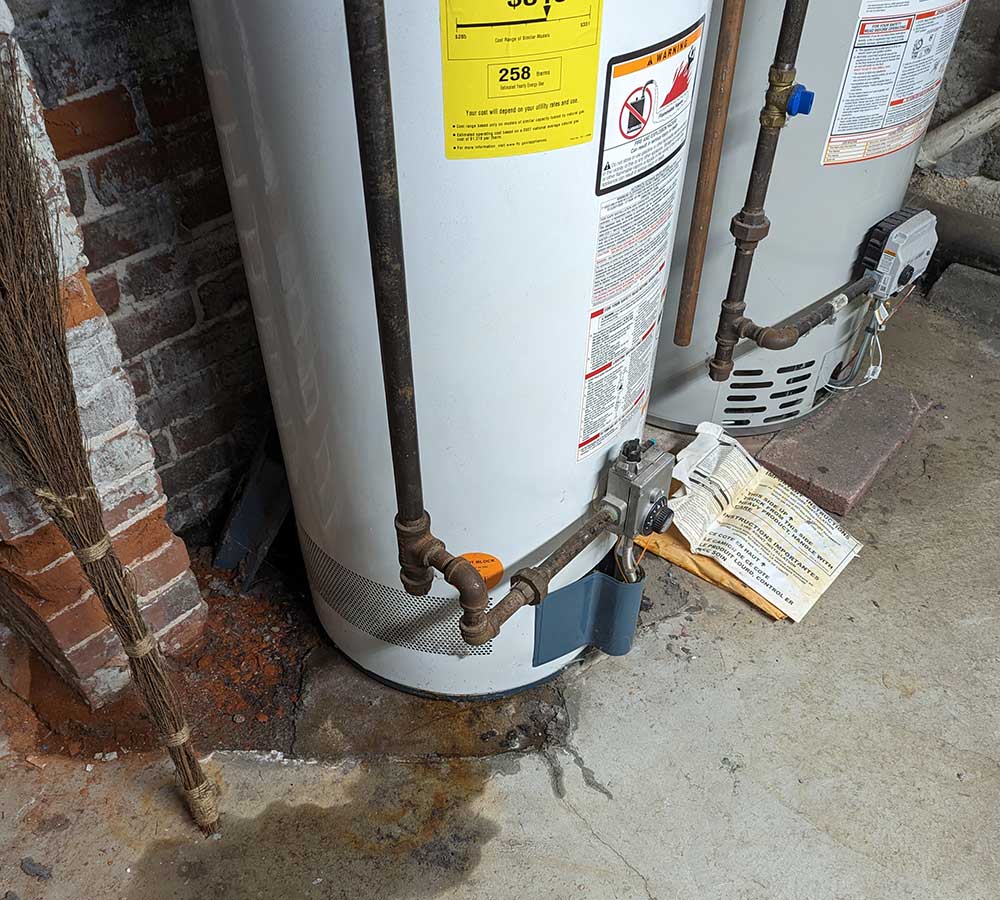
- Take a clear photo of the existing heater, vent connector, gas piping, and surrounding area.
- Record the manufacturer and model number if the label is readable.
- Tell the plumber about any chimney work, heating-equipment changes, basement finishing, or past carbon monoxide alarms.
- Ask which venting method the replacement will use and whether the existing route is compatible.
- Keep the mechanical area accessible and remove stored items near the appliance.
- Ask what permits or inspections apply to the installation in your community.
Homeowners searching for where to find water heater services in new england, 24 hour water heater repair, or 24-hour water heater repair near me should still verify that the company handles gas-appliance installation and venting, not only tank replacement. In an emergency, call for immediate safety guidance first. For a planned replacement, schedule an inspection so the venting, fuel connection, and water-side piping can be evaluated together.
Johnson Bros. Plumbing & Drain Cleaning serves homeowners in Quincy, Abington, and surrounding South Shore communities. Our standard service-call fee is $99. For general plumbing help or to discuss a water-heater concern, visit our contact page.
Massachusetts licensing and regulatory information is available from the Massachusetts Board of State Examiners of Plumbers and Gas Fitters. Manufacturer instructions and local requirements should be reviewed for the specific appliance and property.
Plumbing service in the towns this covers
Common questions
Why is venting important for a gas water heater?
Can a new gas water heater use the old vent?
What are signs of a gas water heater venting problem?
Need a Plumber Today?
Same-day availability when scheduling permits across Quincy, Braintree, Weymouth & the South Shore.
Johnson Bros. Plumbing
Licensed Master Plumber · MA Lic. PL #17034-M · Quincy and South Shore service