EMERGENCY CALLS AROUND THE CLOCK
CLICK TO TALK TO A REAL PLUMBERTAP TO CALL NOW
What Are 8 Signs You Need Water Heater Repair in the South Shore?
A failing water heater can show warning signs before it stops working completely. Learn what South Shore homeowners should check and when to call a licensed plumber.
When a water heater starts acting differently, it is easy to ignore the problem until the first cold shower or a puddle appears in the basement. In older Quincy, Abington, and South Shore homes, water heaters may be installed in basements, utility closets, or finished areas where a small leak can damage flooring and stored belongings.
Here are eight signs that your water heater needs professional attention. Some problems are minor, while others can become an active leak or a safety concern. If you are searching for 24 hour water heater repair or a 24-hour water heater repair near me, start by making the situation safe and then contact a licensed plumber.
1. The hot water runs out unusually fast
If showers turn cold sooner than they used to, the heating element, burner, thermostat, dip tube, or tank capacity may be involved. A change can also happen when household usage increases, but a sudden decline in hot-water supply deserves inspection.
2. The water is rusty or discolored
Rust-colored hot water can indicate corrosion inside the tank or in the hot-water piping. Run the hot water from a few fixtures briefly and compare it with the cold water. If the discoloration is limited to hot water, arrange an evaluation rather than assuming it will clear permanently.
3. You hear popping, banging, or rumbling
Tank water heaters can make noise when mineral sediment collects at the bottom. South Shore water conditions and years of use can contribute to sediment buildup. Noise does not identify the exact fault, but repeated popping or rumbling is a reason to have the appliance checked for efficiency and damage.
4. There is water around the tank
A small puddle, damp concrete, staining, or a drip from a connection should not be ignored. First, keep people away from standing water near electrical equipment. If it is safe to do so, close the water shutoff above the heater and turn off the heater according to the manufacturer's instructions. Do not touch electrical components while standing in water.
5. The temperature keeps changing
Water that switches between hot, warm, and cold may point to a thermostat, heating element, burner, mixing valve, or plumbing issue. The temperature setting should not be adjusted repeatedly as a substitute for diagnosis. Very hot water can also create a scalding risk, especially for children and older adults.
6. The pressure-relief valve is dripping
The temperature and pressure relief valve is an important safety component. Water dripping from the valve or discharge pipe can have several causes, including excessive pressure, overheating, or a valve that no longer seals correctly. Never cap, plug, or permanently block the discharge pipe. Have a licensed plumber inspect it.
7. The pilot light will not stay lit
On a gas water heater, a pilot light that repeatedly goes out may involve the thermocouple, gas supply, ventilation, or another component. Follow only the relighting instructions on the appliance label. If you smell gas, do not operate switches or create a flame; leave the area and contact the appropriate emergency utility service.
8. The tank or connections show corrosion
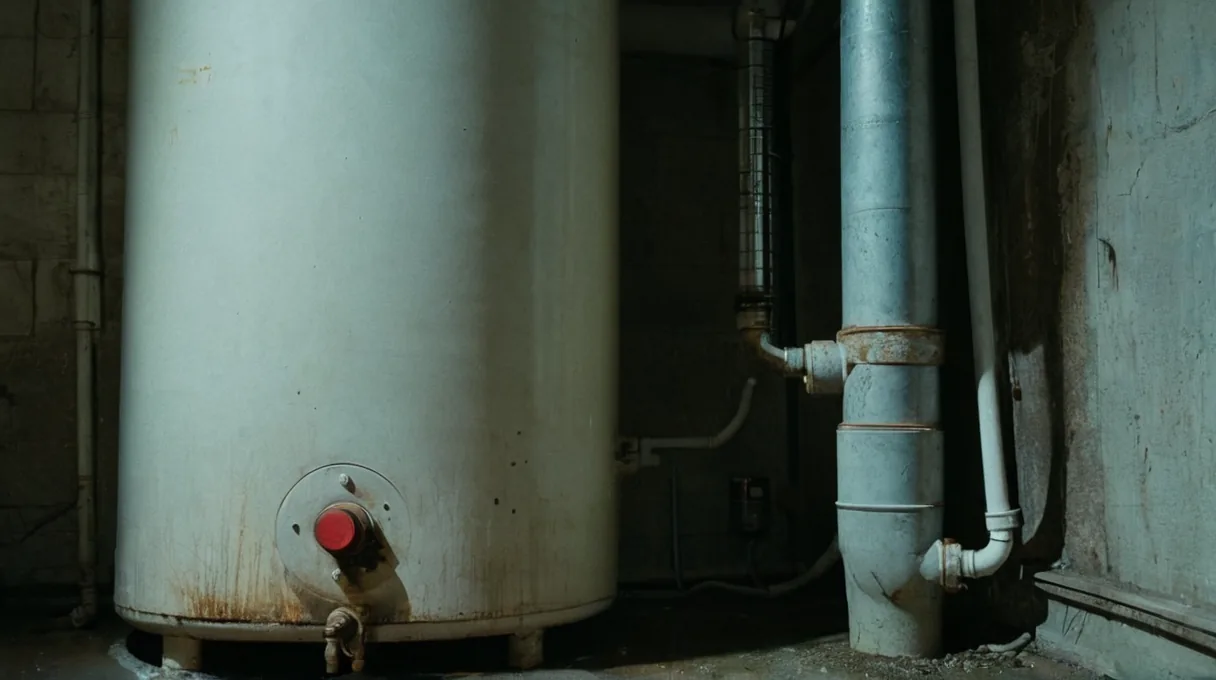
White crust, rust, bubbling paint, or corrosion around fittings can signal a slow leak or failing connection. Corrosion on the tank itself is more concerning than surface residue on a replaceable fitting. Photograph the area, keep the floor clear, and schedule an inspection before the condition worsens.
What should you do before the plumber arrives?
- Move boxes, tools, and valuables away from the water heater.
- Look for the cold-water shutoff above the tank, but do not operate it if the area is unsafe.
- Note whether the water is coming from a pipe connection, drain valve, relief valve, or the tank body.
- For a gas smell, leave immediately and call the gas utility or 911 from a safe location.
- Do not remove panels, disconnect gas lines, bypass safety controls, or open electrical covers.
Massachusetts plumbing work must follow the applicable state plumbing code. You can review official information through the Massachusetts plumbing code resources. A licensed plumber can determine whether the issue is a repairable component, a connection problem, or a water heater that has reached the end of its service life.
Repair or replacement?
Repair may be reasonable when the tank is sound and the problem is limited to a valve, control, heating element, burner component, or connection. Replacement may be considered when the tank body is leaking, corrosion is widespread, parts are no longer practical to service, or repeated repairs are not solving the problem. The correct answer depends on the appliance, installation, condition, and safety findings.
Johnson Bros. Plumbing & Drain Cleaning serves homeowners in Quincy, Abington, and surrounding South Shore communities. If you need help deciding what to do next, contact Johnson Bros. You can also learn more about our company on the about page. Our standard service-call fee is $99; the plumber can explain the findings and available options after inspecting the situation.
The bottom line
Less hot water, unusual noises, rusty water, repeated pilot-light problems, corrosion, relief-valve drips, temperature changes, and water around the tank are all reasons to schedule professional water heater service. Acting while the problem is still contained can help you understand the risk before a New England winter, basement leak, or complete loss of hot water makes the situation more disruptive.
Plumbing service in the towns this covers
Common questions
How do I know if my water heater needs repair?
Is water around a water heater an emergency?
Can a noisy water heater be repaired?
Should I repair or replace a leaking water heater?
Need a Plumber Today?
Same-day availability when scheduling permits across Quincy, Braintree, Weymouth & the South Shore.
Johnson Bros. Plumbing
Licensed Master Plumber · MA Lic. PL #17034-M · Quincy and South Shore service