EMERGENCY CALLS AROUND THE CLOCK
CLICK TO TALK TO A REAL PLUMBERTAP TO CALL NOW

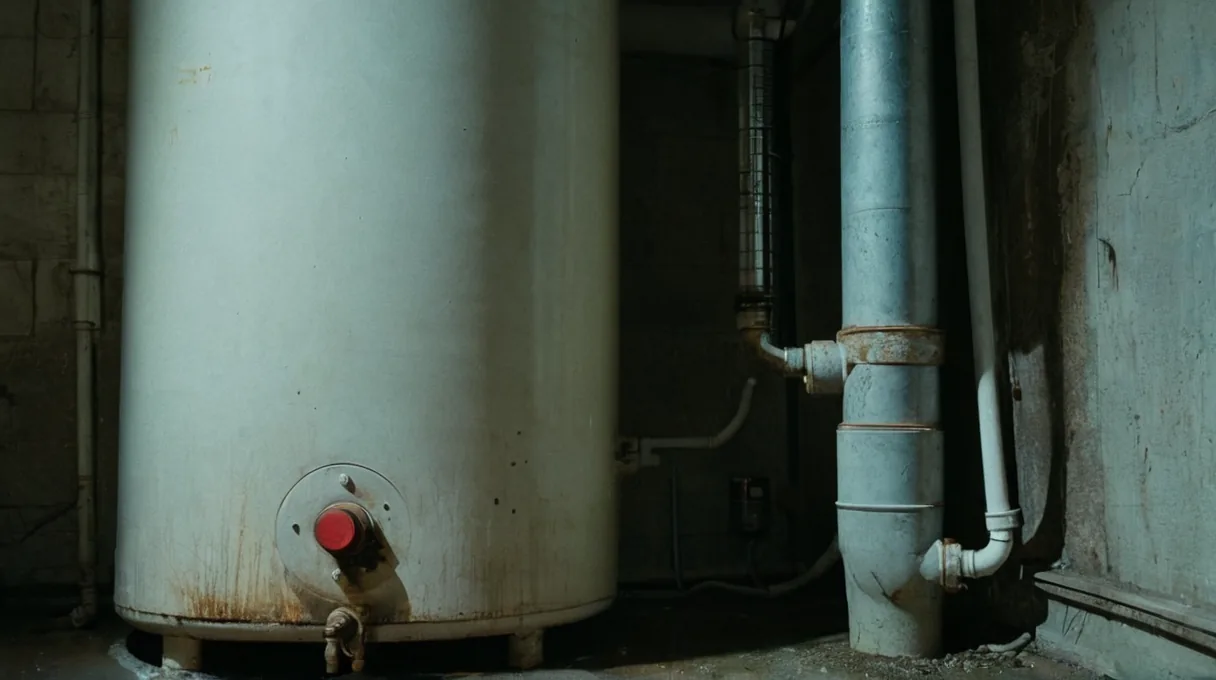
Should I Repair or Replace My Water Heater?
Four things decide whether a water heater is worth repairing: how old it is, whether the rust is in the hot water only, where exactly it is leaking from, and how long it now takes to recover. Here is how to read each one.
Short answer: repair it if the fault is a component and the tank itself is sound. Replace it if the tank is corroded, if it is leaking from the body rather than a fitting, or if it is old enough that you would be paying to postpone a replacement you are going to make anyway.
Four things settle it, and you can check all four yourself in about ten minutes.
How old is it, really?
Age is the first filter because it changes what every other symptom means. The same dripping valve is a cheap fix on a four-year-old tank and a reason to stop spending on a twelve-year-old one.
The manufacture date is encoded in the serial number on the data plate, and each manufacturer publishes how to read theirs — it is usually a month and year in the first four or five characters. If you inherited the house and have no records, that plate is the only honest source; a previous owner's estimate is a guess.
A conventional tank heater past ten years is in the range where replacement becomes the better value even while it is still working. That is a planning horizon, not a deadline. It does not mean replace it today. It means stop investing in it.
Is the rust in the hot water only?
This is the most useful single test on this page, and almost nobody runs it.
Fill a white container from a cold tap, then fill another from a hot tap, and compare them. If both are discolored, the rust is coming from the supply piping — often galvanized pipe elsewhere in the house — and the heater is not the problem. If only the hot side is rusty, the corrosion is inside the tank.
Rust inside the tank cannot be repaired. The glass lining has failed and the steel underneath is corroding. Nothing installed on the outside of the tank changes that, and a heater in that state is on a countdown you cannot see. That symptom, on its own, is a replacement conversation.
One thing worth checking before you conclude the worst: the anode rod. It is a sacrificial component that corrodes so the tank does not, and on a heater that has never been serviced it is often long gone. Replacing a spent anode on a tank that is not yet rusting through is genuine preventative maintenance. Replacing it after the water has gone rusty is too late.
Where exactly is it leaking from?
"The water heater is leaking" covers two completely different situations, and the difference is the whole decision.
- A fitting, a valve or a connection is leaking. That is a repair. The temperature and pressure relief valve, the drain valve at the base, and the supply connections at the top are all replaceable parts, and a competent repair should last as long as the rest of the heater.
- Water is coming from the body of the tank. That is the tank failing, and it is not something that gets patched. A tank that has begun to weep will not stop, and the next stage is not a slow drip.
To tell them apart, dry everything thoroughly, put paper towel under each fitting and under the base, and come back in a few hours. Water on the floor with dry fittings above it means the tank. If you find that, the relevant question is not whether to replace it but how much warning you are going to get.
Either way, know where the shutoff is before you need it. On most installations there is a valve on the cold inlet at the top of the heater as well as the house main.
How long does it take to recover now?
Recovery is how long the heater takes to reheat a tank after it has been drawn down. If two showers back to back used to be fine and the second one now runs cold, something has changed, and it is worth knowing which of three things it is.
Sediment is the common one. Minerals settle out of the water and build up on the bottom of the tank, where they sit between the burner and the water and insulate exactly the surface that is supposed to transfer heat. A tank with a significant sediment bed also tends to rumble or pop when it fires. Draining and flushing addresses this, and it is a maintenance job rather than a repair — although on a heater that has never been flushed in ten years, the flush sometimes reveals a drain valve that will no longer seal afterwards.
The other two are a failing heating element on an electric unit, or a burner and thermocouple problem on a gas one. Both are repairs on an otherwise sound tank.
What does this look like on the South Shore?
Water hardness changes how fast this happens, and it varies across the South Shore. MWRA communities such as Quincy, Milton and Boston receive notably soft water, while towns on their own wells and local sources can run considerably harder — and on harder water sediment accumulates faster than the maintenance schedules in most manuals assume. The MWRA publishes the water quality data for the communities it supplies, which is the place to start if you are on its system.
The other local factor is where these things live. A basement installation that fails floods a finished basement, and the cost of the water damage routinely exceeds the cost of the heater. If yours sits above anything you care about and it is over ten years old, that changes the arithmetic on waiting.
The short version
- Read the manufacture date off the data plate. Over ten years, stop investing.
- Compare hot and cold water in white containers. Rust in the hot only means the tank.
- Dry it, put paper down, and find out whether it leaks from a fitting or from the tank.
- If recovery has slowed, suspect sediment first — that one is often fixable.
If you want someone to look at it before deciding, we cover water heater repair and replacement across the South Shore, and a free estimate is the right route if you are weighing the two. Our service call is $99 and it goes toward the work if you have us do the repair. If the heater has already failed and there is water on the floor, that is emergency plumbing, and the first move is the shutoff.
Plumbing service in the towns this covers
Common questions
How long should a water heater last?
Is rusty hot water always the water heater?
Is a leaking water heater ever repairable?
Why does my hot water run out faster than it used to?
Does a water softener help a water heater last longer?
Need a Plumber Today?
Same-day availability when scheduling permits across Quincy, Braintree, Weymouth & the South Shore.
Johnson Bros. Plumbing
Licensed Master Plumber · MA Lic. PL #17034-M · Quincy and South Shore service